

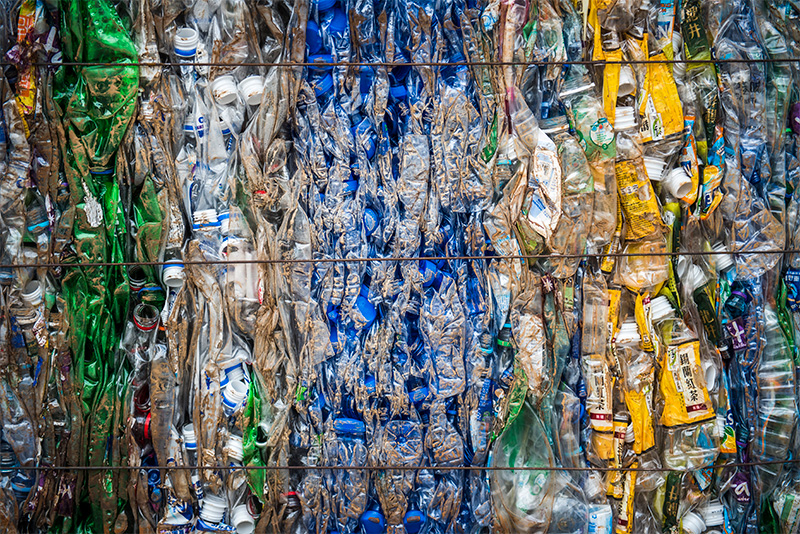
As we expected, Royal Decree 1055/2022 of 27 December on packaging and packaging waste and the text was published today. Additionally, despite persistent rumours, it does not seem that among the measures to tackle inflation it has been agreed to delay the application of the tax on non-reusable plastic packaging, which will therefore come into force on 1 January.
Highlights:
(a) Ecodesign: the design of packaging taking into account environmental criteria such as, inter alia, reduction in weight or volume, substitution of hazardous materials or substances with less hazardous ones, improvement of its characteristics for reuse, increased recyclability of packaging when it becomes waste and increased or better use of materials obtained from recycling packaging waste.
(b) Recyclability of packaging: the effective recyclability of packaging waste, which is determined by considering the following criteria:
- That it is collected separately in an efficient manner, through user access to nearby collection points.
- It does not have characteristics, elements or substances that prevent sorting and separation, recycling or limit the further use of the recycled material.
- They are recycled on an industrial scale with commercial processes that ensure sufficient quality of the recycled material for further use, and in a quantity of more than 50 % of the mass of the collected waste of that type of packaging.
Recyclability used to be defined and Recyclable packaging seems to have been replaced by recyclability of packaging. Our comments were:
1. Recyclability:
Packaging is considered to be recyclable when it meets the following four criteria.
- The packaging must be made from a material that is collected for recycling, has market value and/or is supported by a mandatory legislative programme.
- The packaging must be sorted and aggregated into defined streams for recycling processes.
- Packaging can be processed and recovered/recycled with commercial recycling processes.
- The recycled product becomes a raw material that is used in the production of new products.
The definition of quality recycling was previously incorporated and has been removed.
2. Through the measures contained in this Royal Decree and others that may be adopted, the aim is to achieve a 20% reduction by 2030 in the number of single-use plastic beverage bottles placed on the market, with respect to the information included in the packaging section of the Register of Product Producers for the year 2022.
To present in bulk those fresh fruits and vegetables that are marketed whole. This obligation does not apply to fruit and vegetables packed in lots of 1.5 kilograms or more, fruit and vegetables packed under a protected or registered variety or bearing an indication of differentiated quality or organic farming, as well as fruit and vegetables that present a risk of deterioration or spoilage when sold in bulk.
3. To ensure the circular use of plastic packaging waste, each product producer shall endeavour to ensure that plastic packaging not made of compostable plastic that it places on the market has the following recycled plastic content:
- By 2025, packaging made from polyethylene terephthalate (PET): at least 25 % recycled plastic, calculated as an average of all PET packaging it places on the market.
- By 2025 for plastic packaging not subject to the obligation in point (a): at least 20 % recycled plastic, calculated as an average of all such packaging placed on the market.
- By 2030, plastic packaging: at least 30 % recycled plastic, calculated as an average of all plastic packaging it places on the market.
4. In order to drive compliance with the targets in paragraph 3, by 2030 product producers shall aim to ensure that packaging made of non-compostable plastic that they place on the market achieves the following percentage of recycled plastic content per package:
- 35 % for plastic bottles, jars and similar items up to 5 litres capacity, including their caps and lids in the total packaging count.
- 15 % for jars, pots, tubs, trays, baskets and other similar articles made of plastic.
- 15 % for plastic films used in primary packaging applications, including, but not limited to, bagging, liners, peel-off lids or wrappings.
- 30 % for plastic films used in secondary or tertiary packaging applications, such as shrink wrapping, liners, sacks, bubble wrap, pouches, sachets and others.
- 60 % for pallets, crates, drums and wholesale storage containers and other similar articles made of plastic.
- They shall establish the necessary measures to ensure compliance with the objectives of Article 11.3 and 11.4, as well as any other measures that may be established for the incorporation of recycled materials in new packaging, facilitating the availability of materials in sufficient quality and quantity. Among other measures, they shall use part of the recovered PET and other plastics for the manufacture of recycled plastic, including r-PET.
5. In the event that compliance with the targets in paragraphs 3 and 4 would compromise the requirements of Article 12.1, the maximum possible recycled plastic content shall be incorporated (Packaging shall be designed in such a way as to reduce its environmental impact and the generation of waste throughout its life cycle, both in its manufacture and in its subsequent use, and in such a way as to ensure that the recovery and disposal of packaging that has become waste is carried out without endangering human health and without harming the environment, and in accordance with the principle of the waste hierarchy. Likewise, the design measures adopted to comply with the objectives set out in the Royal Decree shall not compromise the essential functions of the packaging, nor the levels of safety and hygiene necessary for the packaged product and the consumer).
6. Within the framework of public procurement, public administrations shall include the purchase of products in reusable and easily recyclable packaging, and/or in packaging made from recycled materials, the quality of which complies with the required technical specifications.
7. Within their respective spheres of competence, public authorities may introduce any other measures to encourage the environmentally sound recycling of packaging waste, in particular measures of an economic nature. These measures shall comply with European Union law and shall be designed and implemented in such a way as not to constitute a barrier to trade, free competition or the single market.
The reduction in weight of the material used per unit of packaging, especially single-use packaging, to the limits that allow its viability, without compromising the recyclability of the packaging.
Article 11. Measures to promote the recycling of packaging waste.
2. With the same objective mentioned in the previous section, the minimum quality requirements for the different fractions of materials recovered from packaging waste under local jurisdiction in packaging sorting plants and in other mixed fraction treatment plants for the separation and sorting of packaging waste, shall be agreed by consensus between the managers of these plants, the managers of recycling plants, the collective systems of extended producer responsibility, the autonomous communities and the local authorities. These minimum requirements shall be applicable throughout the territory of the State.
ANNEX VIII
Criteria for the modulation of the financial contribution to collective extended producer responsibility schemes
1. Criteria and levels of modulation.
The modulation criteria shall relate at least to:
(a) For bonuses:
1) Exceeding the minimum recycling targets for the specific materials contained in the packaging, which shall be financed directly from the penalties for the packaging materials for which the recycling rate was below the targets. In the event that all the materials contained in the packaging exceed the recycling targets, this bonus shall not be applied.
2. The reduction in weight or volume of the packaging by means of eco-design, without compromising the recyclability of the packaging.
3. The improvement of the recyclability of the packaging, which must be audited and certified by entities other than the manufacturers of the packaging and the producers of the product themselves and in close collaboration with the waste managers, in accordance with the provisions of article 13.4.
4. The incorporation of secondary raw materials from the recycling of packaging, with a lower bonus for non-recyclable packaging or packaging with low recyclability compared to more easily recyclable packaging in order to avoid the loss of materials.
For reusable packaging, when it is marketed for the first time and provided that there is a system of subsequent reuse or proof of its reuse as a product by the user or consumer (for example, its reuse as tableware).
6. For packaging from preparation for re-use operations when it is placed on the market again.
b) For penalties:
1. The gap in compliance with the minimum recycling targets for the specific materials contained in the packaging, which shall directly cover the bonuses for the packaging materials for which the recycling rate was above the targets.
The number of packaging elements that make up the consumer sales unit (CSU) and the greater or lesser difficulty in separating them.
3. The need to implement specific measures to be able to guarantee the recycling of certain categories of packaging.
4. The non-recyclability of packaging.
The presence of disruptors that affect their separation, sorting or recycling, regardless of the percentage of the disruptor.
6.º The presence of substances after recycling that may compromise the use of the recycled material.
Modulation levels shall be high enough to provide an incentive and have a significant effect on the ecodesign decisions of product producers.
No bonus may be granted for packaging affected by a penalty due to:
i. The presence of disruptors that affect sorting, sorting or recycling.
ii. The presence of substances after recycling that may compromise the use of the recycled material.
The penalty will disappear when the packaging is modified so that it is no longer subject to the penalty, or when a technological development eliminates the causes that led to the penalty being imposed.
2. Specific rebates.
(a) A minimum bonus of 10 % shall be granted for packaging marked with the percentage of packaging material, including its components, available for quality recycling as set out in Article 13(4).
(b) A bonus shall be granted for plastic packaging incorporating at least an additional 10 % over and above the mandatory minimum content of recycled plastic as set out in Articles 11.3 and 11.4, provided that the recycled plastic comes from packaging waste. The amount of the bonus shall be determined on the basis of the weight of recycled plastic incorporated in the packaging. The use of recycled plastic from household packaging waste shall give rise to an additional bonus. The amounts of these bonuses shall be differentiated for the different types of plastic polymers in order to provide incentives for recycling.
The use of production offcuts resulting from the manufacture of this type of packaging and of materials from pre-consumer packaging waste shall not give rise to the bonus.
These rebates will be financed by the contributions related to the marketing of products in plastic packaging, and especially by penalties for packaging that is not recyclable or contains disruptors that make it difficult to sort or recycle.
These bonuses will be cumulative as appropriate.
3. Specific penalties.
Minimum penalties shall be set for at least the following disruptors, depending on the packaging materials and their base rate:
(c) Rigid plastic:
1st Polyethylene or polypropylene with a density greater than 1 g/cm3: 10 %.
2. Dark colours which are not detectable by optical sorting, and in particular containing carbon black: 50 %.
d) PET:
Use of glass microspheres in bottles and flasks: 50 %.
2nd Combined with polyethylene in trays: 50 %.
3. Combined with aluminium, PVC or silicone in bottles, flasks and rigid plastic, with a density greater than 1 g/cm3: 100%.
Opaque PET (mineral filler > 4%) in bottles, jars and rigid plastic: 100%.
e) PVC:
1st In bottles and jars: 100 %.
These penalties shall be cumulative as appropriate.
The penalties for these disruptors will disappear in the event that technological development eliminates the causes for their imposition.
Download the BOE of the Ministry for Ecological Transition and the Demographic Challenge.

