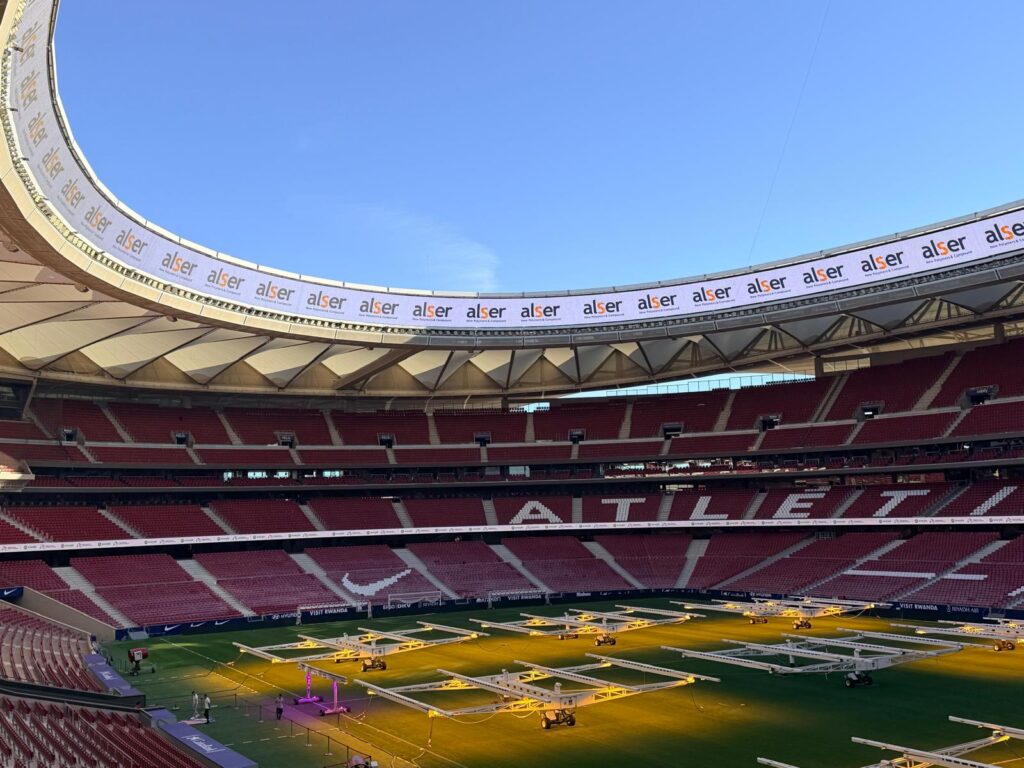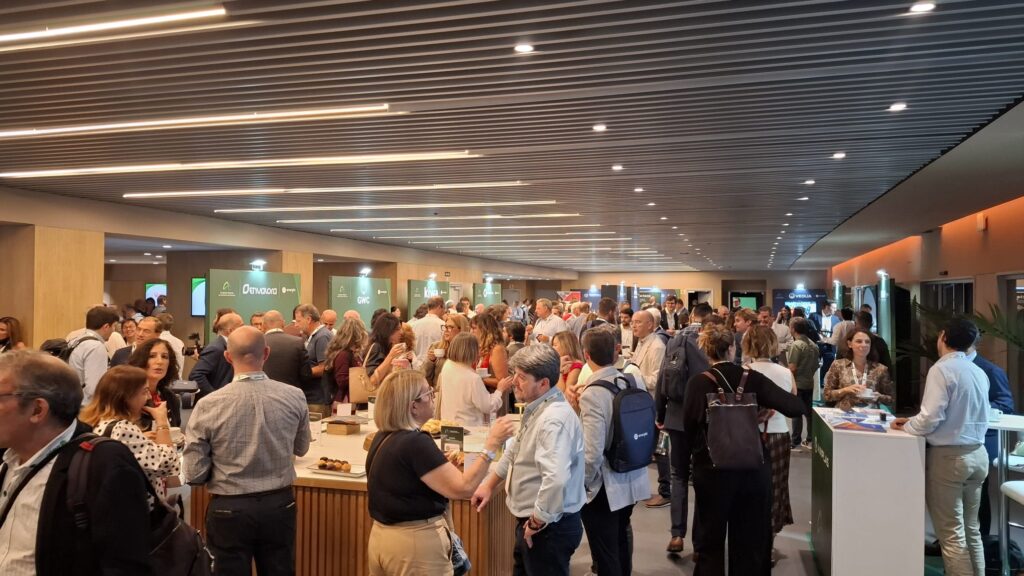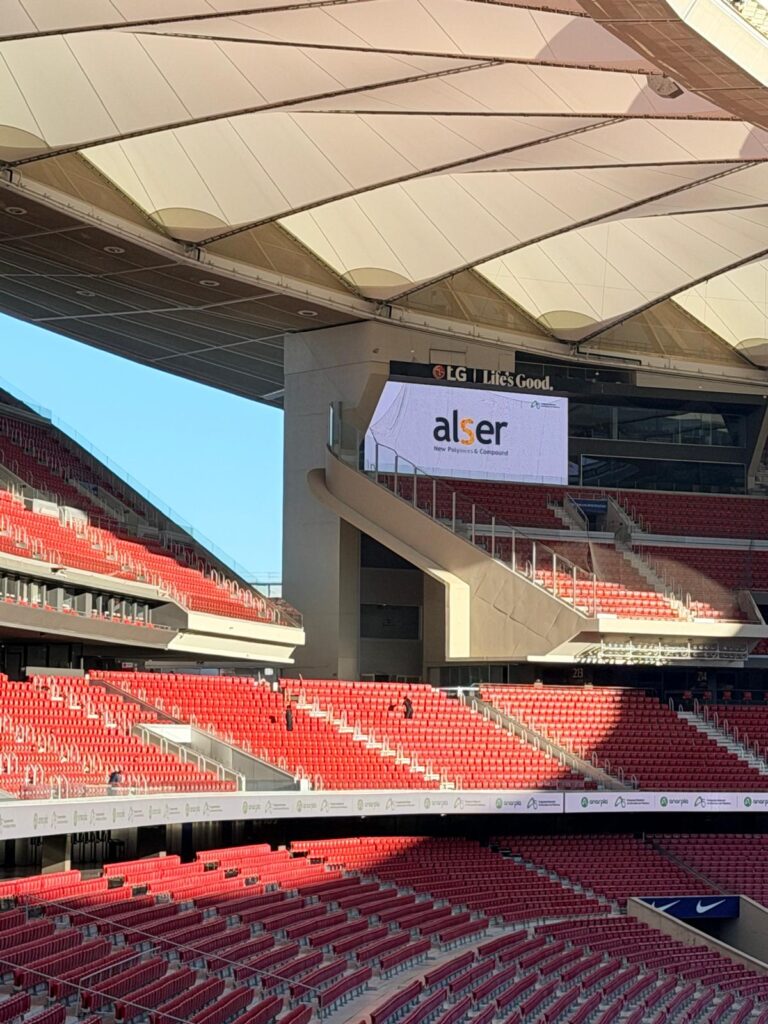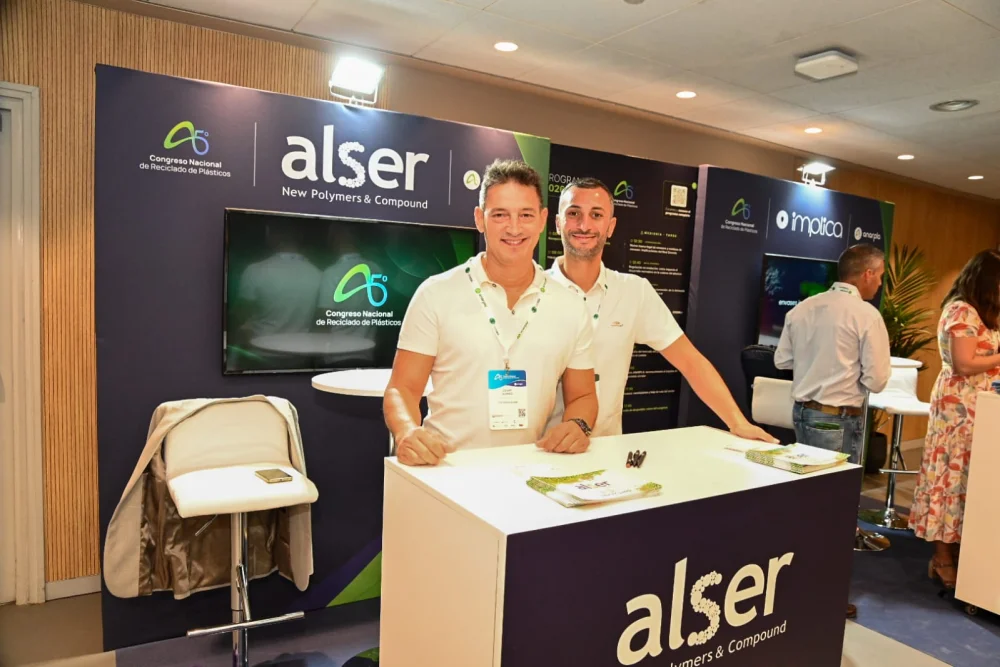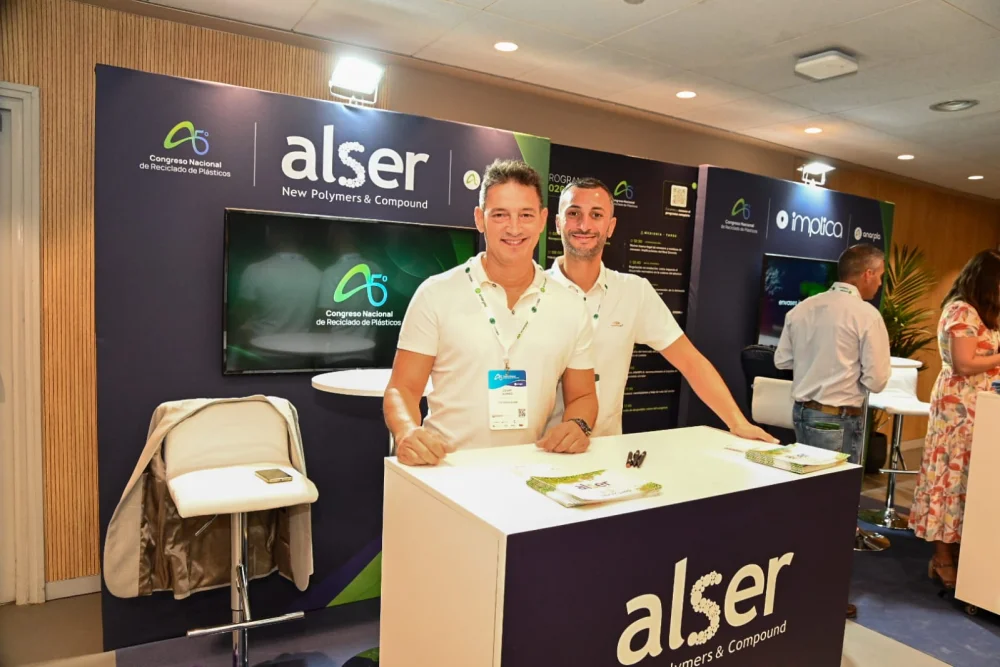
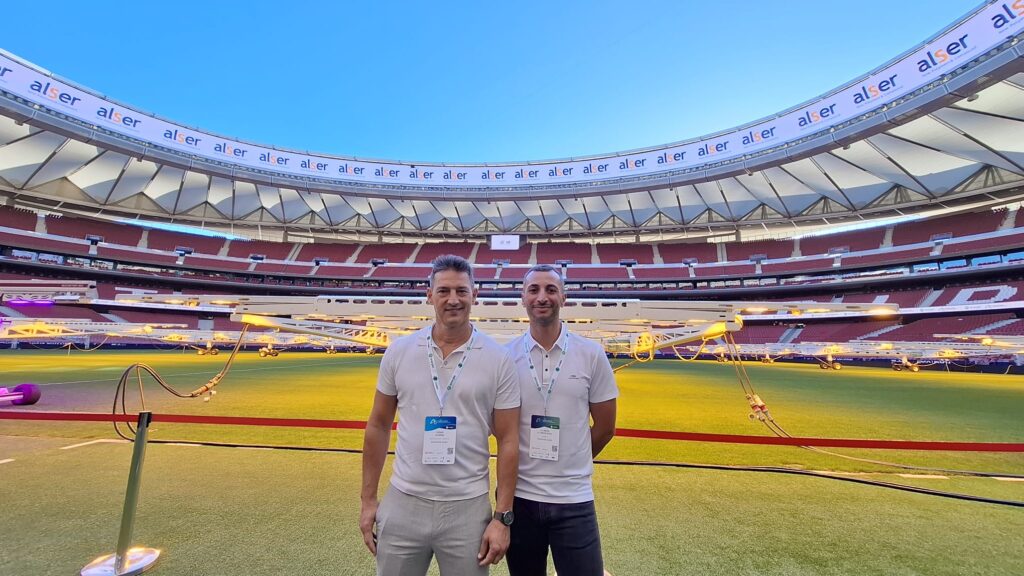
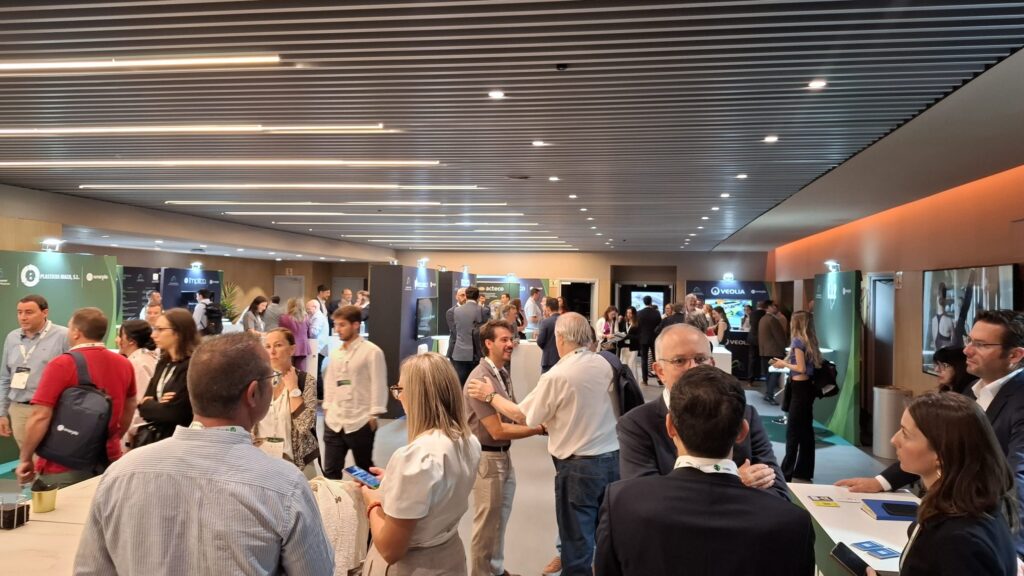
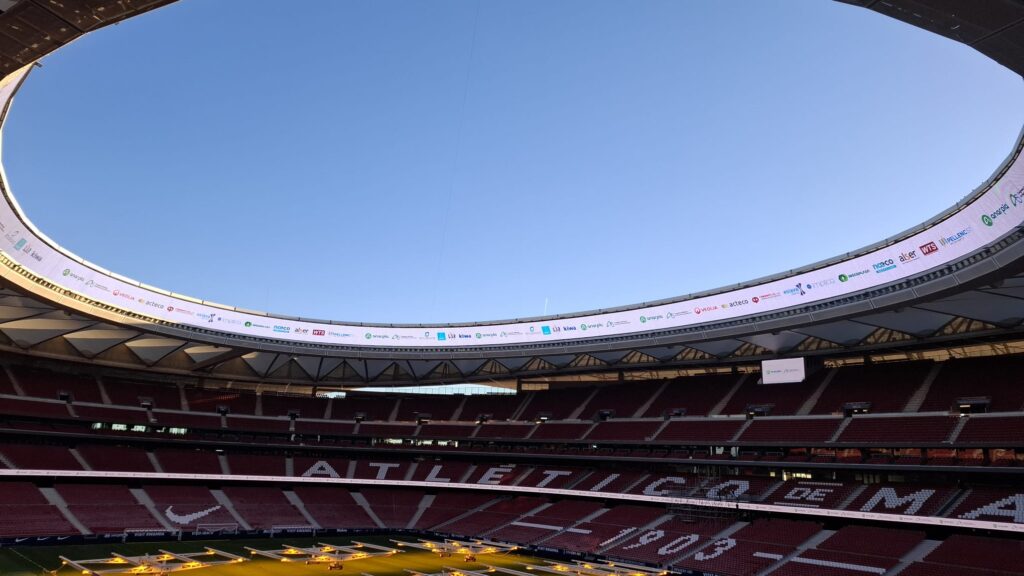
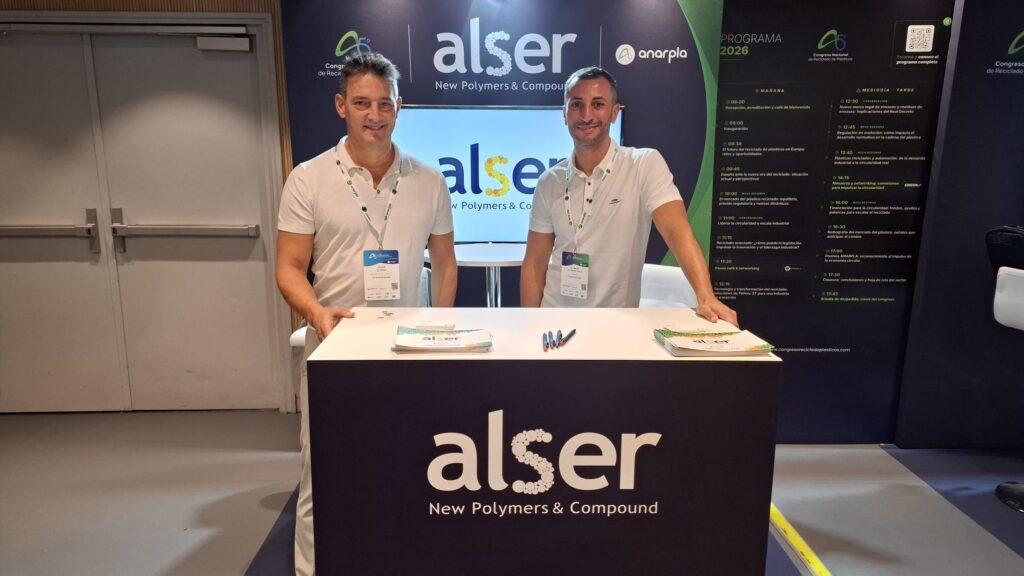
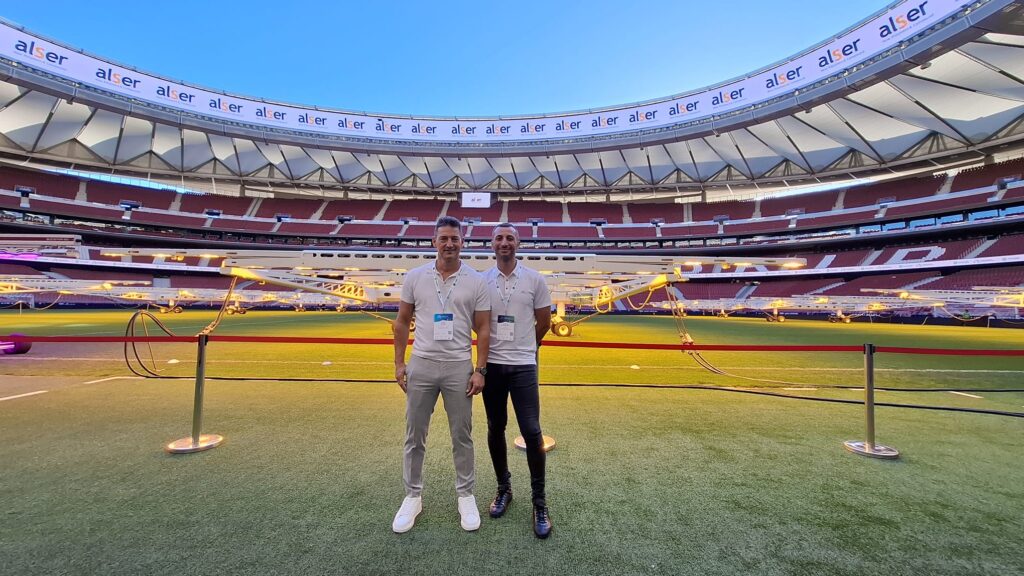
Plásticos Alser took part as a sponsor in the fifth edition of ANARPLA’s National Plastics Recycling Congress, an event that brought together some of the leading players in recycling and the plastics value chain in Spain in Madrid.
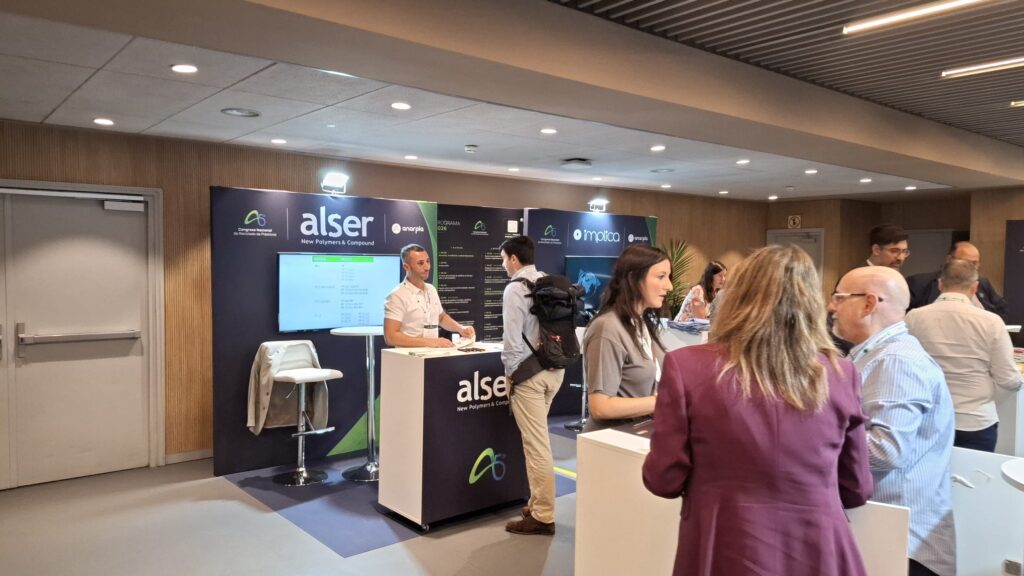
Alser’s participation also had a significant commercial dimension. The presence of its team enabled it to network with professionals and companies in the sector and to identify a growing market interest in new solutions, applications and possibilities for the use of recycled plastic materials.
The Congress once again brought to the fore some of the sector’s main challenges: material availability, quality, supply capacity, new industrial applications, eco-design and the need to translate circularity objectives into technically viable solutions.
More recycled material in the automotive sector
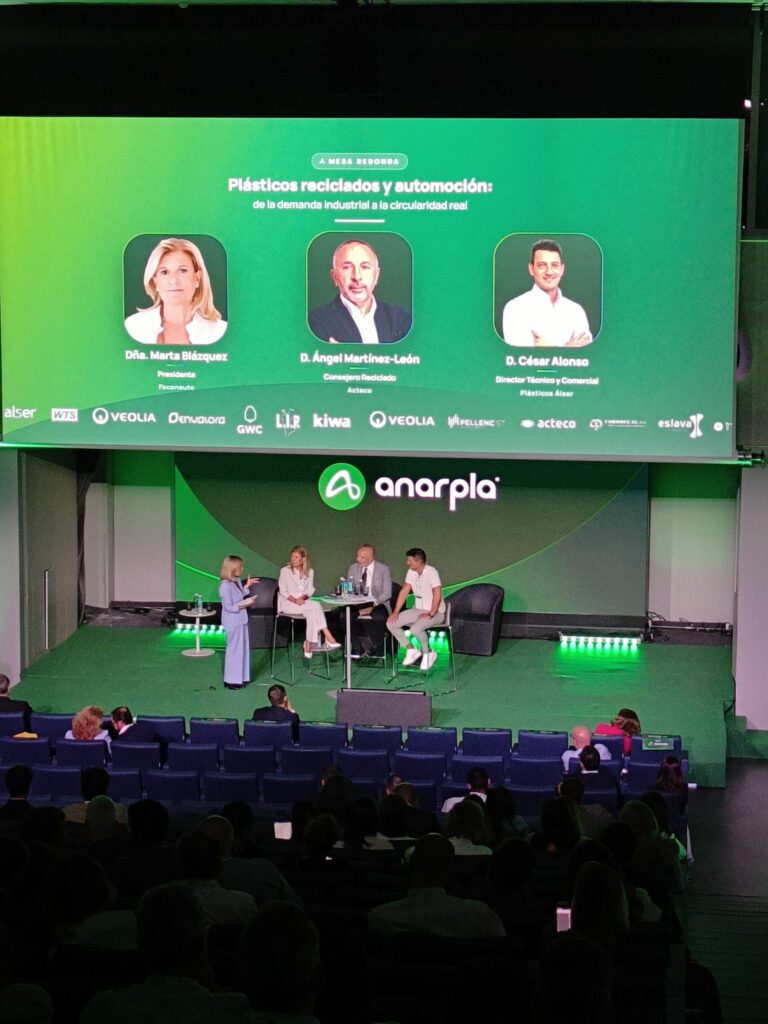
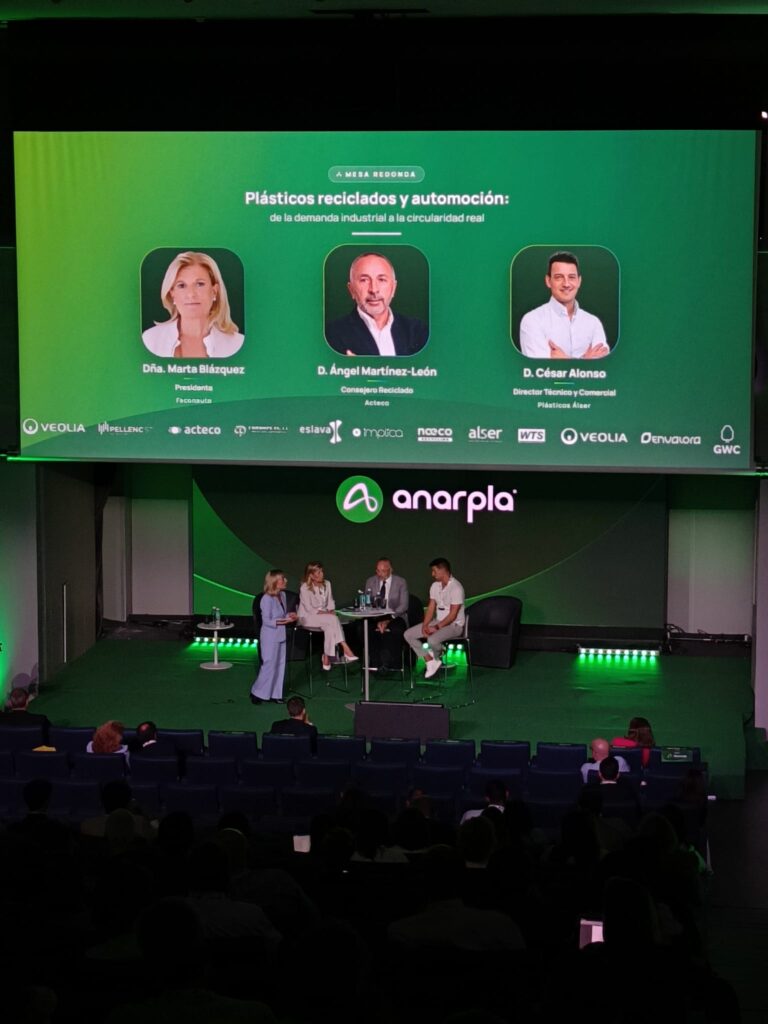
One of the highlights of the day for Plásticos Alser was César Alonso’s participation in the round-table discussion ‘Recycled plastics and the automotive sector: from industrial demand to true circularity’.
During his presentation, Alonso highlighted the significant opportunity the industry has to increase the percentage of recycled material in the automotive parts that OEMs are specifying for the coming years.
The sector is working towards 2030, with targets aiming to achieve percentages of 30 per cent and even up to 50 per cent of recovered material content in certain applications.
This scenario presents a significant opportunity for plastics recycling, but it also poses technical and industrial capacity challenges.
During the panel discussion, César Alonso sought to convey several direct messages regarding this reality:
“If certain specifications are not scaled back, it will be difficult to ensure sufficient supply capacity.”
The increase in demand for recycled materials makes it necessary to analyse which specifications are truly essential for each component and application. Maintaining certain excessively restrictive requirements may limit the availability of materials capable of meeting them and, consequently, hinder the supply of the volumes the industry will require.

From waste to a genuine polymer raw material
Another point made by César Alonso during the panel discussion vividly summed up one of the main challenges of recycling:
“Having stones and mud does not mean you have bricks to build a house.”
The analogy illustrates the difference between having plastic waste and actually having a polymer raw material ready for reuse in an industrial process.
Not all recovered plastics can be directly converted into materials suitable for new applications. To achieve this, it is necessary to select, sort, process, formulate and adapt these materials until the required technical properties are attained.
This step is particularly important in demanding sectors such as the automotive industry, where stability, performance, traceability and supply capacity are fundamental elements.
For Plásticos Alser, one of the major challenges in the coming years will be precisely to ensure that a greater quantity of recovered plastic can be converted into reliable polymeric raw materials suitable for industrial-scale use.
Eco-design remains a work in progress
César Alonso also highlighted a less positive aspect of the move towards greater circularity:
“Eco-design remains a key objective for achieving full recyclability and creating a closed-loop ‘Car to Car’ system.”
The design of components remains a key factor in ensuring materials can be recovered at the end of their useful life.
To move towards a truly circular economy in the automotive sector, it will be necessary to design with aspects such as the composition of materials, their separation and subsequent recyclability in mind from the very outset.
The ultimate aim is to move towards a ‘Car-to-Car’ model, in which materials from end-of-life vehicles can be recovered, transformed back into raw materials and returned to the automotive sector itself as part of new components.
To achieve this, eco-design must play an increasingly important role and go hand in hand with the development of recycling and processing technologies.
Market interest in new solutions and applications
Beyond its participation in the round-table discussion, Plásticos Alser’s commercial presence at the Congress enabled the company to make numerous contacts and witness first-hand the market’s interest in developing new solutions and finding new applications for recycled materials.
The need to incorporate higher percentages of recycled content is creating new opportunities, but it also requires recyclers, converters, manufacturers and OEMs to work together so that these objectives can be turned into real industrial solutions.
Alser’s participation as a sponsor of ANARPLA’s 5th National Plastics Recycling Congress thus reaffirms its commitment to the sector’s development and to a circular economy based not only on targets, but also on technical capacity, the availability of materials and real-world applications.